



.svg)


.svg)
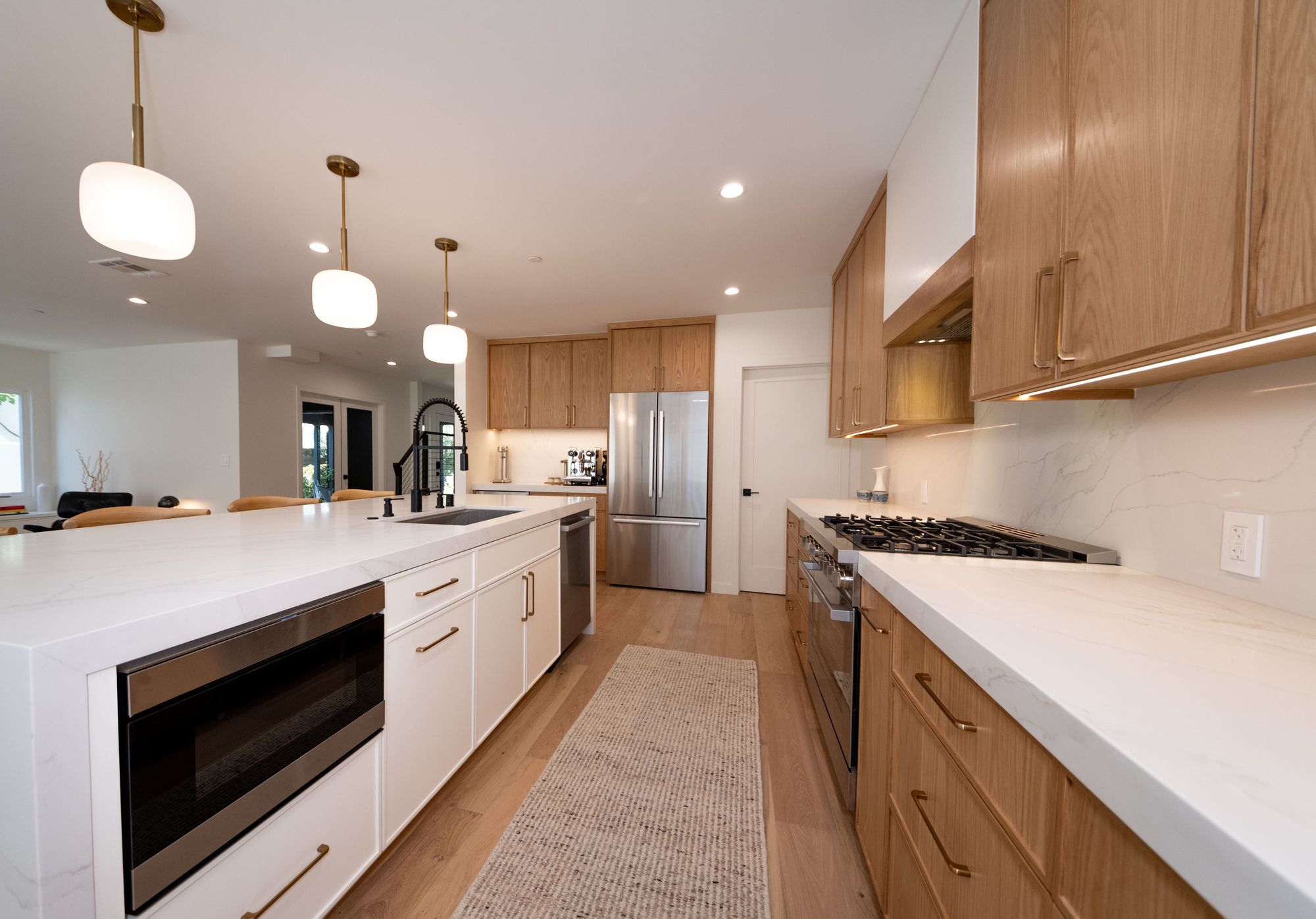
You found a construction contractor in Mar Vista willing to do your kitchen remodel or ADU for less. But then you thought: what if I just hire the subcontractors myself and cut out the middleman?
It sounds logical. Skip the general contractor's markup, save 10-20%, and pocket the difference. Some homeowners do pull it off. But most don't, and the ones who don't often end up spending more than they would have with a residential general contractor from the start.
Here's what the data actually shows, and what you need to know before deciding.
What Does a General Contractor's Markup Actually Cover?
Before you can decide if the markup is worth it, you need to know what it pays for.
A licensed general contractor in Manhattan Beach typically charges a markup of 10-20% on top of the direct project costs (labor, materials, and subcontractors). According to Next Insurance (January 2026), this covers:
- Overhead (8-15%): Insurance, licensing, office operations, project management tools, and site supervision.
- Net profit (5-10%): A reasonable return for coordinating and delivering your project.
Residential projects, like remodels and home additions, tend to fall on the higher end of the gross margin range, often 18-25%, according to the Siana Marketing General Contractor Profit Margin report (2026).
That markup is real money. On a $200,000 project, you're looking at roughly $20,000-$40,000 going to the GC. So it's understandable why self-managing sounds appealing.
But here's the part most calculators leave out.
The Real Cost of Self-Managing Subcontractors
When you act as your own general contractor, you eliminate the markup. But you also take on everything the GC was doing to earn it.
You lose access to volume pricing. Contractors often get better rates on materials and labor because they bring repeat business. As a one-time homeowner, you're likely paying retail or close to it. That can offset 5-15% of what you thought you saved, according to BuildingAdvisor's analysis of owner-builder projects.
You absorb every mistake. When a subcontractor makes an error, you're the one coordinating and paying for the fix. Rework on self-managed projects can add 10-30% to total costs, according to industry advisory sources.
Your time has real value. Self-managing a home addition or ADU is essentially a part-time or full-time job. Scheduling subcontractors, ordering materials, managing inspections, tracking payments, solving problems on the fly. Full custom builds managed by owners can take 12-30 months, compared to faster timelines when a professional GC is running coordination.
The bottom line: while you might realistically save $20,000-$30,000 on a $200,000 project after adjustments, industry analyses suggest unanticipated issues erode those savings in the majority of owner-builder cases.
California's Licensing Rules Have Changed for 2026 (And They Matter)
If you're in Los Angeles or anywhere in California, the legal side of self-managing subcontractors deserves serious attention.
As of January 1, 2026, several updates from the California Contractors State License Board (CSLB) went into effect (per CSLB Industry Bulletin #25-04, December 29, 2025):
- GCs must disclose subcontractor details upon homeowner request (name, license number, contact, classification). This gives homeowners more visibility into who's working on their home.
- Home improvement contracts must include email addresses and allow cancellation via email. Missing this information opens the door to CSLB complaints.
- Penalties for unlicensed activity increase to a minimum of $1,500 starting July 1, 2026, with adjustments for inflation.
- Workers' compensation enforcement is ramping up, with full universal mandate delayed to 2028 but audits increasing now.
What this means for owner-builders: You can still pull your own permits in California without holding a GC license. But you assume full legal liability. You must use licensed specialty contractors for electrical, plumbing, and HVAC work. And in many jurisdictions, you may need to live in the home for 12 months before selling if you used the owner-builder exemption.
Projects over $1,000 in combined labor and materials that require a permit must involve licensed contractors. ADUs in Los Angeles now carry additional requirements for 2026, including sprinkler systems, solar-ready design, and heat pump compliance. Any coordination gap risks stop-work orders or failed inspections.
GC vs. Self-Managing: A Side-by-Side Look
When it comes to upfront cost, hiring a licensed general contractor typically includes a 10–20% markup on labor and materials, though GCs often offset this through access to better trade pricing. Self-managing avoids that markup, but homeowners frequently end up paying higher rates for individual subs and materials when sourcing on their own.
The time commitment looks very different between the two paths. With a GC, your role is largely oversight — a few check-ins and decisions along the way. Self-managing is closer to a full-time job, with complex projects running 12 to 30+ months of active coordination on your part.
Liability and risk is one of the starkest differences. A licensed GC absorbs significant legal and financial exposure — their insurance and warranties cover injuries, defects, and workmanship issues. When you self-manage, all of that falls on you directly, including legal liability if a subcontractor is injured on your property.
For California projects specifically, a GC handles permits, inspections, and keeps up with evolving regulations like the 2026 building rules. Self-managing means that burden is yours — including verifying that licensed trades are handling the work legally required of them.
On quality and coordination, a GC brings professional scheduling and a single point of accountability under a unified warranty. Self-managing introduces higher potential for scheduling conflicts, errors, and fragmented responsibility when something goes wrong.
The bottom line: hiring a GC is the right move for most homeowners, especially on complex projects like ADUs, additions, and full remodels. Self-managing can work for experienced individuals who have the time and are taking on a more straightforward scope of work.
What Are Real Project Costs in Los Angeles Right Now?
Here are current ranges from verified sources. These are estimates only. Actual costs depend on your site, scope, and timing. Always get a licensed professional to assess your specific project.
ADU in Los Angeles (Sweeten, GreatBuildz, January 2026):
- Garage conversion (350-400 sq ft): $100,000-$150,000
- New detached ADU (400-500 sq ft): $150,000-$200,000
- New detached ADU (600-800 sq ft): $200,000-$250,000
- Larger units (up to 1,200 sq ft): $300,000-$350,000
- Per-square-foot average: $300-$400
Home Additions in Los Angeles (Sweeten, October 2025):
- Mid-grade addition: ~$503 per sq ft
- High-end addition: ~$606 per sq ft
Kitchen Remodel in Los Angeles (200 sq ft, Sweeten):
- Budget range: $24,500-$28,000
- Mid-grade: $37,500-$45,000
Bathroom Remodel in Los Angeles (35 sq ft, Sweeten):
- Budget range: $18,000-$25,000
- Mid-grade: $28,500-$32,000
One note on ADU bids specifically: GreatBuildz (2026) flagged that bids under $100,000 for an ADU in Los Angeles are a serious red flag. As they put it:
"If a contractor tells you they can do it for less, be very cautious." — GreatBuildz, ADU Cost Guide 2026
When Does Self-Managing Actually Make Sense?
To be fair, self-managing subcontractors isn't always the wrong choice. It can work if you check all of these boxes:
- You have direct experience in construction management or project coordination.
- You have significant time to dedicate to the project, potentially full-time.
- Your scope is relatively simple (think: one trade, no complex permitting).
- You have existing relationships with licensed, vetted subcontractors.
- You fully understand California licensing requirements and local building codes.
If even one of those doesn't apply, the risk-reward math shifts quickly. For most homeowners in Los Angeles tackling an ADU, home addition, or kitchen remodel, professional GC oversight tends to protect both the budget and the timeline.
At Benton Builders, we've worked with homeowners across West LA, Mar Vista, Culver City, Venice, Marina del Rey, Playa Vista, Manhattan Beach, Hermosa Beach, Redondo Beach, Torrance, Palos Verdes Estates, and Rancho Palos Verdes. The stories we hear most often from people who tried self-managing first usually involve the same themes: a sub who disappeared mid-project, a failed inspection, or a realization too late that the scope wasn't as simple as it looked.
The ROI Angle: Does a GC Actually Protect Your Investment?
This is worth thinking about, especially if you're building an ADU.
A professionally built and code-compliant ADU in Los Angeles can generate rental income of roughly $2,000-$4,000 per month, based on 2025 market analyses. At that rate, the break-even on the investment is typically 5-10 years, depending on what you spent.
But that math only works if the ADU passes inspection and is legally rentable. A project that runs into permitting problems, failed inspections, or code violations doesn't just cost more to fix. It delays your rental income and can complicate resale.
Professional documentation and code compliance also support stronger property valuations. That's one of the reasons Benton Builders focuses so heavily on building to code and keeping homeowners informed throughout the process.
Ready to See What Your Project Would Actually Cost?
If you're weighing the GC vs. self-managing decision for an ADU, home addition, kitchen or bathroom remodel, or new construction in Los Angeles, the best next step is a real conversation with someone who knows your area.
Benton Builders offers transparent pricing and clear communication from the first meeting. We're happy to walk through your scope, share what's realistic for your budget, and help you decide what makes sense. Learn more about our approach to home additions and remodels in Los Angeles.
The Bottom Line: Which Approach Saves You More?
For most homeowners, especially those in Los Angeles dealing with ADUs, hillside sites, or complex remodels, hiring a licensed general contractor typically delivers better value when you account for all costs: not just the markup, but the time, risk, rework potential, and compliance requirements that come with self-managing.
Saving 10-20% upfront sounds great. But if coordination issues, permitting delays, or a failed inspection eat into those savings, the math stops working in your favor fast.
The right answer depends on your experience, your time, and the complexity of your project. When in doubt, talk to a licensed professional before committing either way.
Frequently Asked Questions
Is it legal to be your own general contractor in California? Yes, homeowners can act as owner-builders in California and pull their own permits without holding a GC license. However, you must use licensed trades for electrical, plumbing, and HVAC work, and you assume full legal liability for the project. Resale restrictions may also apply depending on your jurisdiction. Always verify current rules with the CSLB at cslb.ca.gov.
How much can I save by managing my own subcontractors? On a $200,000 project, you might realistically save $20,000-$30,000 by skipping a GC. However, industry sources note that unanticipated issues, such as rework, scheduling problems, and material costs without volume pricing, frequently reduce or eliminate those savings.
What are the biggest risks of self-managing subcontractors? The main risks include full liability for site injuries, code violations, material substitutions, and post-completion defects without a unified warranty. In California, you also face increased enforcement around workers' compensation and unlicensed subcontractors.
Do general contractors get better pricing on materials and subcontractors? Generally, yes. Licensed GCs often have established relationships with suppliers and subcontractors that give them access to better pricing. Homeowners acting as owner-builders typically pay retail or near-retail rates, which can offset a portion of the markup they're trying to avoid.
How long does a self-managed home addition or ADU take compared to hiring a GC? Self-managed builds commonly run into delays from scheduling conflicts and permitting issues. Full custom builds managed by homeowners can take 12-30 months. A construction company in Torrance, CA, with established trade networks and experience managing parallel schedules can typically complete projects faster.

We're a Call Away.
We’re always happy to soundboard ideas, answer questions, and get the ball rolling, free of any obligations.



Licensed Premium Contractors • Fully Bonded & Insured • Serving West LA's Finest Properties